Can electrification turn climate pledges into fossil-fuel cuts?
On October 8, AFP reported that the EU is shifting its COP31 focus toward implementation and electrification.
The EU is lowering expectations for next month's COP31 summit in Turkey and emphasizing implementation, particularly replacing fossil fuels with electricity across the economy. [1][4] Turkey is proposing a voluntary target for electricity to reach 35 percent of countries' energy consumption by 2035…
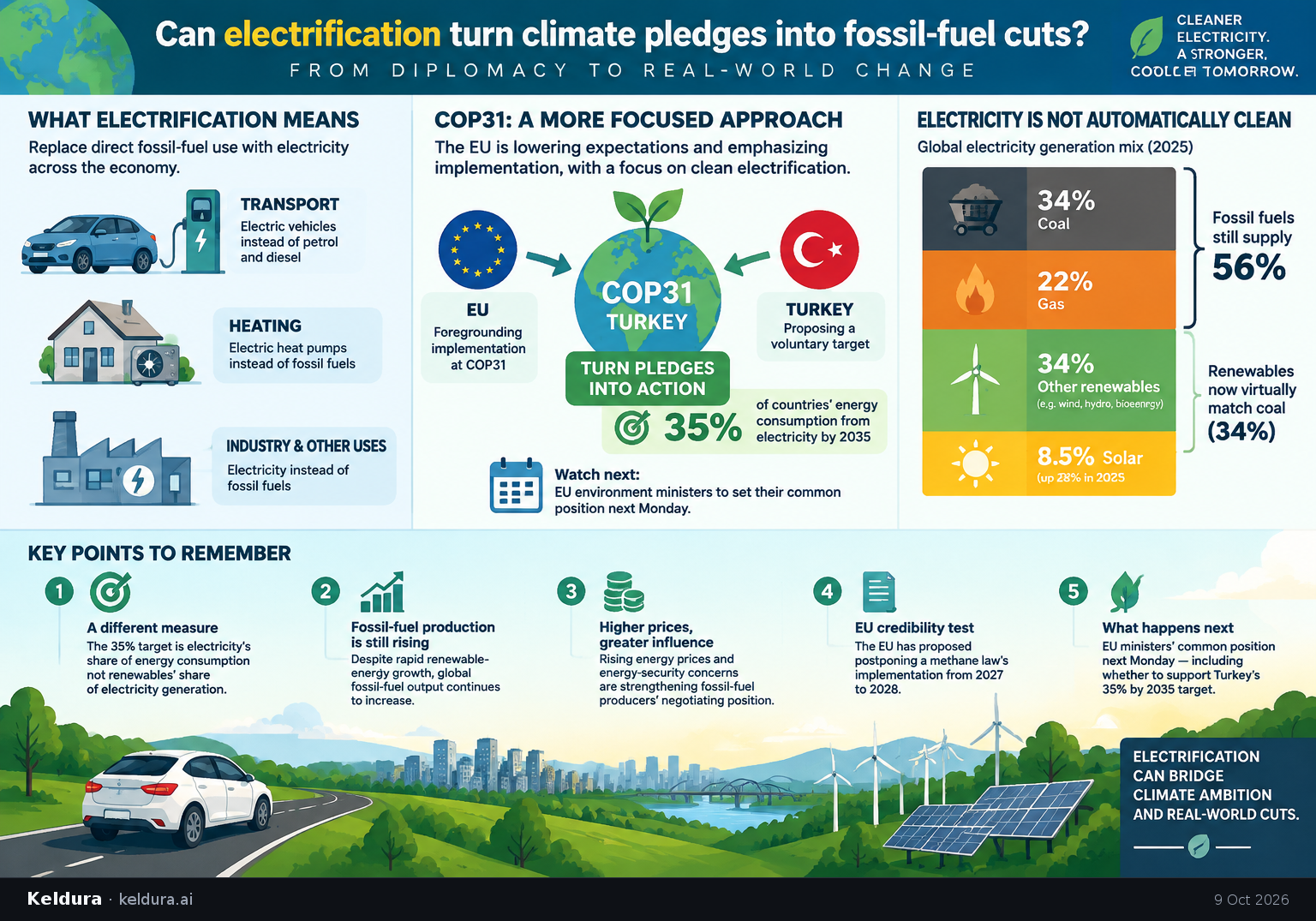
The EU is lowering expectations for next month's COP31 summit in Turkey and emphasizing implementation, particularly replacing fossil fuels with electricity across the economy. [1][4] Turkey is proposing a voluntary target for electricity to reach 35 percent of countries' energy consumption by 2035, with EU environment ministers due to establish their common position next Monday. [4] The shift comes as fossil-fuel production continues to rise despite rapid renewable-energy growth. [5]
Why it matters: Electrification links climate diplomacy to practical changes in transport, heating and other energy uses, but electricity is not automatically clean: coal and gas still supplied 34 percent and 22 percent of global electricity generation, respectively, in 2025. Replacing direct fossil-fuel use therefore needs to be considered alongside how the additional electricity is generated. [4][5]
Key insights: The proposed 35 percent target concerns electricity's share of energy consumption—not renewable energy's share of electricity generation. Those are different measures of the transition. [4][5] | Solar generation rose 28 percent in 2025, reaching 8.5 percent of global electricity generation, while renewables collectively virtually matched coal's 34 percent share. [5] | Higher fossil-fuel prices and energy-security concerns are shaping policy, while EU budget pressures are limiting willingness to make further commitments. [4][5] | The EU's implementation message faces a credibility test: the commission proposed postponing a methane law's implementation from 2027 to 2028. [4]
Cheatsheet facts: What changed: The EU is foregrounding implementation and clean electrification in its COP31 approach. [4] | Why now: Turkey is advancing an electrification pledge as rising energy prices strengthen fossil-fuel producers' negotiating position. [4][5] | Watch next: The EU ministers' common position next Monday, including whether they support Turkey's 35-percent-by-2035 target. [4]