Indonesia’s disaster review identifies five priorities for health-response reform
An after-action review of Indonesia’s response to severe floods and landslides in Aceh, North Sumatra and West Sumatra found that the late-2025 crisis strained coordination, data systems and surge capacity.[2] The WHO-supported review also credited rapid mobilization of reserve health workers and e…
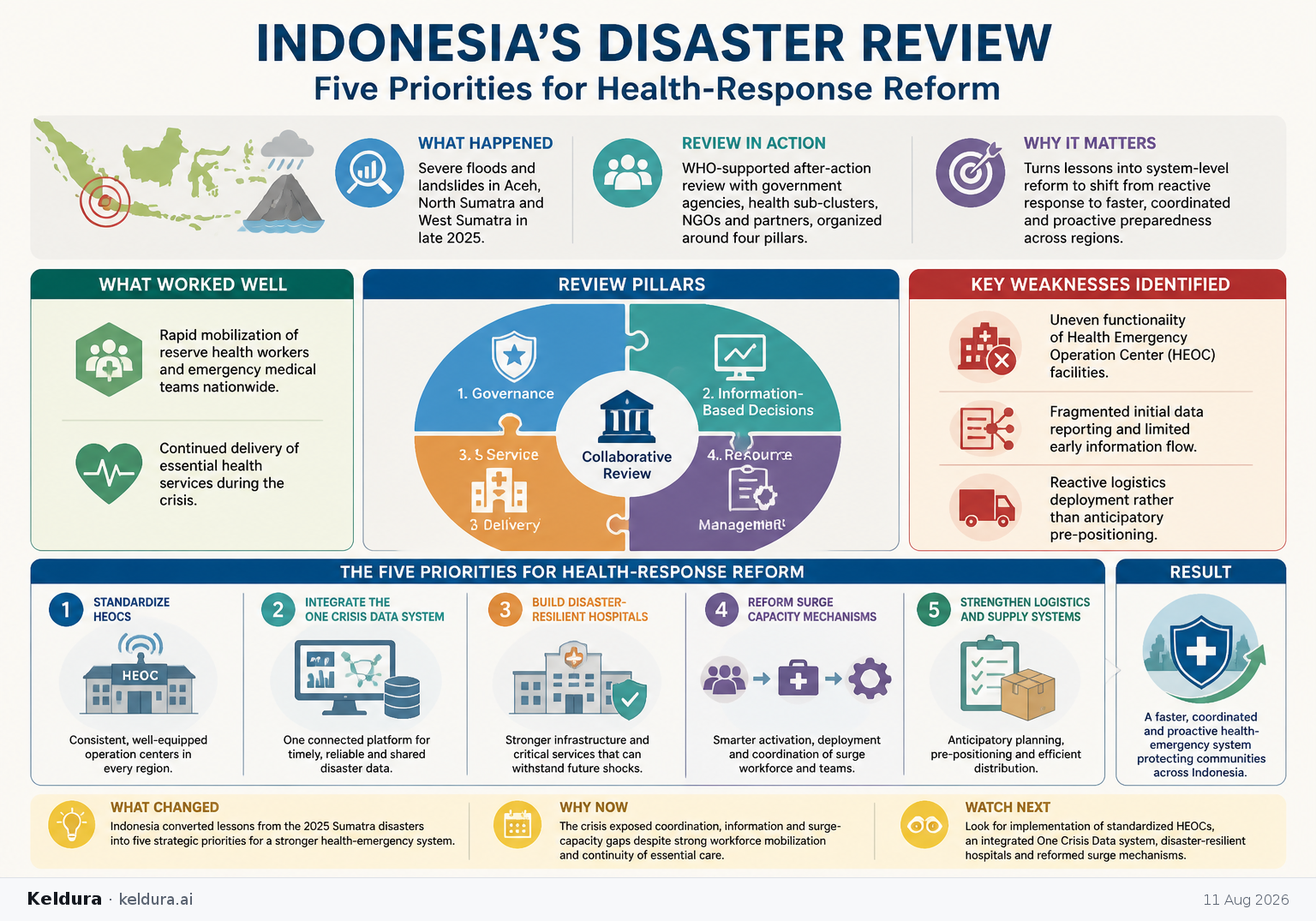
An after-action review of Indonesia’s response to severe floods and landslides in Aceh, North Sumatra and West Sumatra found that the late-2025 crisis strained coordination, data systems and surge capacity.[2] The WHO-supported review also credited rapid mobilization of reserve health workers and emergency medical teams, alongside continued essential health services, while identifying uneven emergency-operations capacity, fragmented early reporting and reactive logistics.[2]
Why it matters: The findings give Indonesia a system-level reform agenda aimed at shifting health-emergency management from reactive deployment toward faster, coordinated and proactive preparedness across regions.[2]
Key insights: The review involved government agencies, health sub-clusters, NGOs and partners, organized around governance, information-based decisions, service delivery and resource management.[2] | Rapid national surge mobilization and continuity of essential health services were identified as response strengths.[2] | Key weaknesses included uneven functionality of Health Emergency Operation Center facilities, fragmented initial data reporting and reactive logistics deployment.[2] | The resulting priorities include HEOC standardization, integration of the One Crisis Data system, disaster-resilient hospitals and reform of surge-capacity mechanisms.[2]
Cheatsheet facts: What changed: Indonesia converted lessons from the 2025 Sumatra disasters into five strategic priorities for strengthening its health-emergency system.[2] | Why now: The floods and landslides exposed coordination, information and surge-capacity gaps despite strong workforce mobilization and continuity of essential care.[2] | Watch next: Watch for implementation of standardized HEOCs, an integrated One Crisis Data system, disaster-resilient hospitals and reformed surge mechanisms.[2]
An after-action review of Indonesia’s response to severe floods and landslides in Aceh, North Sumatra and West Sumatra found that the late-2025 crisis strained coordination, data systems and surge capacity.[2] The WHO-supported review also credited rapid mobilization of reserve health workers and emergency medical teams, alongside continued essential health services, while identifying uneven emergency-operations capacity, fragmented early reporting and reactive logistics.[2]
Why it matters: The findings give Indonesia a system-level reform agenda aimed at shifting health-emergency management from reactive deployment toward faster, coordinated and proactive preparedness across regions.[2]
Key insights: The review involved government agencies, health sub-clusters, NGOs and partners, organized around governance, information-based decisions, service delivery and resource management.[2] | Rapid national surge mobilization and continuity of essential health services were identified as response strengths.[2] | Key weaknesses included uneven functionality of Health Emergency Operation Center facilities, fragmented initial data reporting and reactive logistics deployment.[2] | The resulting priorities include HEOC standardization, integration of the One Crisis Data system, disaster-resilient hospitals and reform of surge-capacity mechanisms.[2]
Cheatsheet facts: What changed: Indonesia converted lessons from the 2025 Sumatra disasters into five strategic priorities for strengthening its health-emergency system.[2] | Why now: The floods and landslides exposed coordination, information and surge-capacity gaps despite strong workforce mobilization and continuity of essential care.[2] | Watch next: Watch for implementation of standardized HEOCs, an integrated One Crisis Data system, disaster-resilient hospitals and reformed surge mechanisms.[2]
X copy pack
Edition complete
You've reached the end of this edition.