WHO will launch updated dementia risk-reduction guidelines in a global webinar
WHO announced a global webinar on 16 July 2026 to launch the second edition of its guidelines on risk reduction of cognitive decline and dementia.[1] WHO said the updated guidance reflects the latest scientific evidence and will offer practical recommendations for countries, health systems, communi…
WHO announced a global webinar on 16 July 2026 to launch the second edition of its guidelines on risk reduction of cognitive decline and dementia.[1] WHO said the updated guidance reflects the latest scientific evidence and will offer practical recommendations for countries, health systems, communities, individuals, professionals, and decision-makers.[1]
Why it matters: WHO describes dementia as a leading cause of disability and dependency among older people, and says prevention matters because there are no disease-modifying treatments or a cure.[1] Updated prevention guidance can shape national policy, health-system programming, and public-facing brain-health advice.[1]
Key insights: The launch event is designed as a high-level forum featuring people with lived experience, scientific experts, and country representatives.[1] | WHO says the guidelines are intended to help integrate dementia risk reduction into policies and programmes.[1] | The webinar is explicitly framed around actionable steps different audiences can take to support brain health.[1] | The timing suggests WHO is using the webinar to disseminate updated evidence-backed recommendations rather than merely announce a publication.[1]
Cheatsheet facts: What changed: WHO is releasing the second edition of its dementia risk-reduction guidelines in a global webinar on 16 July 2026.[1] | Why now: WHO says dementia is a major cause of disability and dependency, and prevention is especially important because there is no cure or disease-modifying treatment.[1] | Watch next: Look for the updated recommendations and any country or health-system commitments announced during or after the webinar.[1]
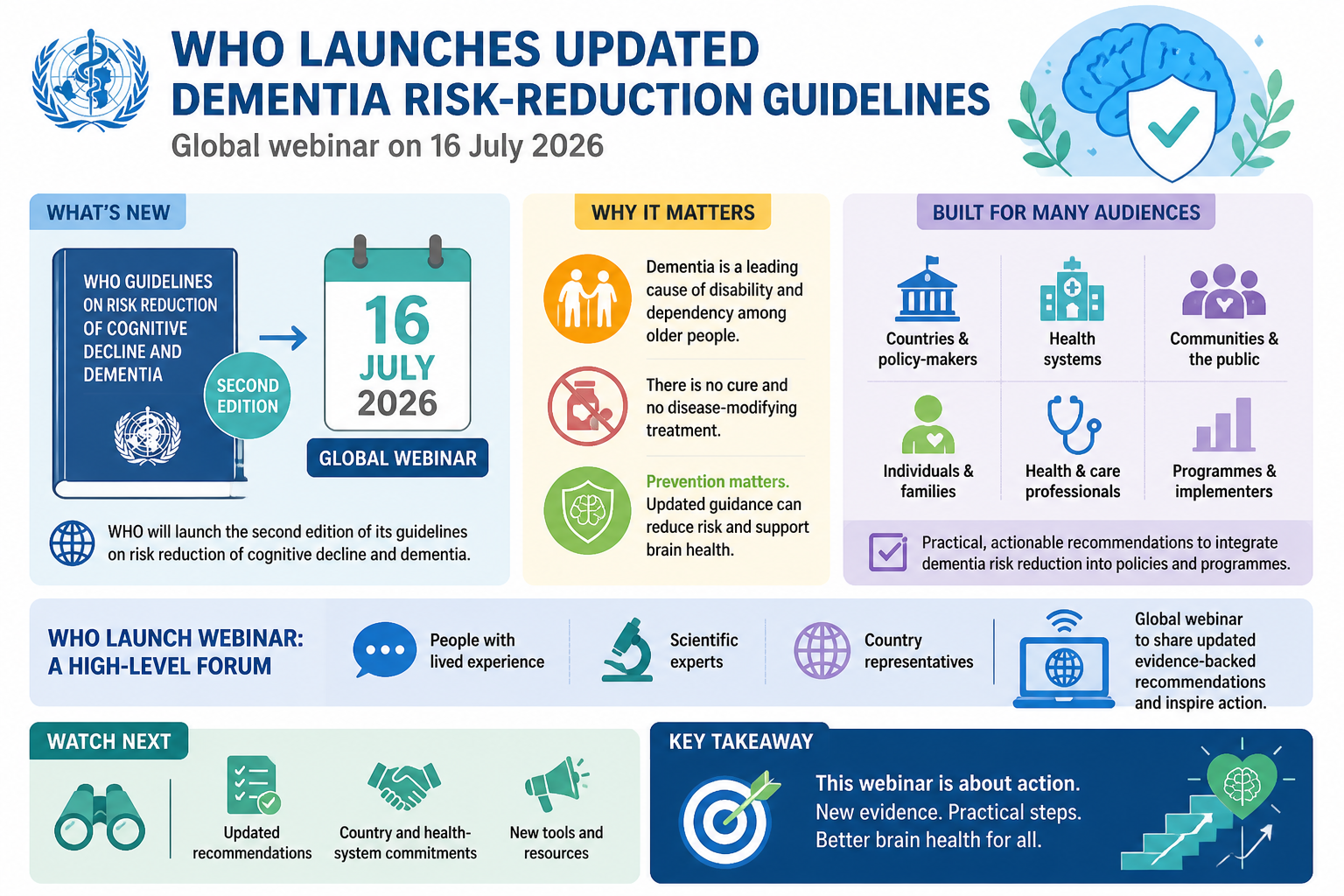
WHO announced a global webinar on 16 July 2026 to launch the second edition of its guidelines on risk reduction of cognitive decline and dementia.[1] WHO said the updated guidance reflects the latest scientific evidence and will offer practical recommendations for countries, health systems, communities, individuals, professionals, and decision-makers.[1]
Why it matters: WHO describes dementia as a leading cause of disability and dependency among older people, and says prevention matters because there are no disease-modifying treatments or a cure.[1] Updated prevention guidance can shape national policy, health-system programming, and public-facing brain-health advice.[1]
Key insights: The launch event is designed as a high-level forum featuring people with lived experience, scientific experts, and country representatives.[1] | WHO says the guidelines are intended to help integrate dementia risk reduction into policies and programmes.[1] | The webinar is explicitly framed around actionable steps different audiences can take to support brain health.[1] | The timing suggests WHO is using the webinar to disseminate updated evidence-backed recommendations rather than merely announce a publication.[1]
Cheatsheet facts: What changed: WHO is releasing the second edition of its dementia risk-reduction guidelines in a global webinar on 16 July 2026.[1] | Why now: WHO says dementia is a major cause of disability and dependency, and prevention is especially important because there is no cure or disease-modifying treatment.[1] | Watch next: Look for the updated recommendations and any country or health-system commitments announced during or after the webinar.[1]
X copy pack
Edition complete
You've reached the end of this edition.