Solomon Islands’ recovery remains narrow and short on jobs
The World Bank projects Solomon Islands’ economy will grow 2.8% in 2026, mainly because of mining and public investment, after three consecutive years of contraction from 2020 through 2022 and a subsequent rebound.[2] The recovery remains narrow: mining, remittances, and infrastructure spending hav…
The World Bank projects Solomon Islands’ economy will grow 2.8% in 2026, mainly because of mining and public investment, after three consecutive years of contraction from 2020 through 2022 and a subsequent rebound.[2] The recovery remains narrow: mining, remittances, and infrastructure spending have generated limited employment and uneven community benefits.[2]
Why it matters: About 9,000 young Solomon Islanders enter the labor force annually, but only around 2,100 formal jobs are created, making broader and more labor-intensive growth central to incomes and social resilience.[2] Fiscal room is also limited because cash reserves cover less than one month of spending and public debt reached 30% of GDP in 2025.[2]
Key insights: Mining supplied more than half of Solomon Islands’ exports in 2025, up from 4% in 2019, but the sector creates relatively few jobs and requires substantial investment.[2] | Declining grants, higher fuel costs, climate-related shocks, and Cyclone Maila are adding pressure to public finances and reinforcing the need to rebuild financial buffers.[2] | The World Bank identifies higher-value agriculture, fisheries, tourism, renewable energy, and private-sector development as opportunities for a more diversified economy.[2] | Recommended measures include stronger mining governance and revenue collection, planned tax reforms, investment in productive sectors, and wider access to business finance.[2]
Cheatsheet facts: What changed: A new World Bank Economic Update put 2026 growth at 2.8% but found that the mining- and public-investment-led recovery is producing limited employment and uneven benefits.[2] | Why now: Mining’s export share has surged while labor-force entrants substantially outnumber new formal jobs, and thin cash reserves leave the country exposed to fiscal and climate shocks.[2] | Watch next: Observable indicators include implementation of planned tax reforms, stronger mining revenue collection, rebuilding of government cash buffers, and investment in agriculture, fisheries, tourism, renewable energy, and business finance.[2]
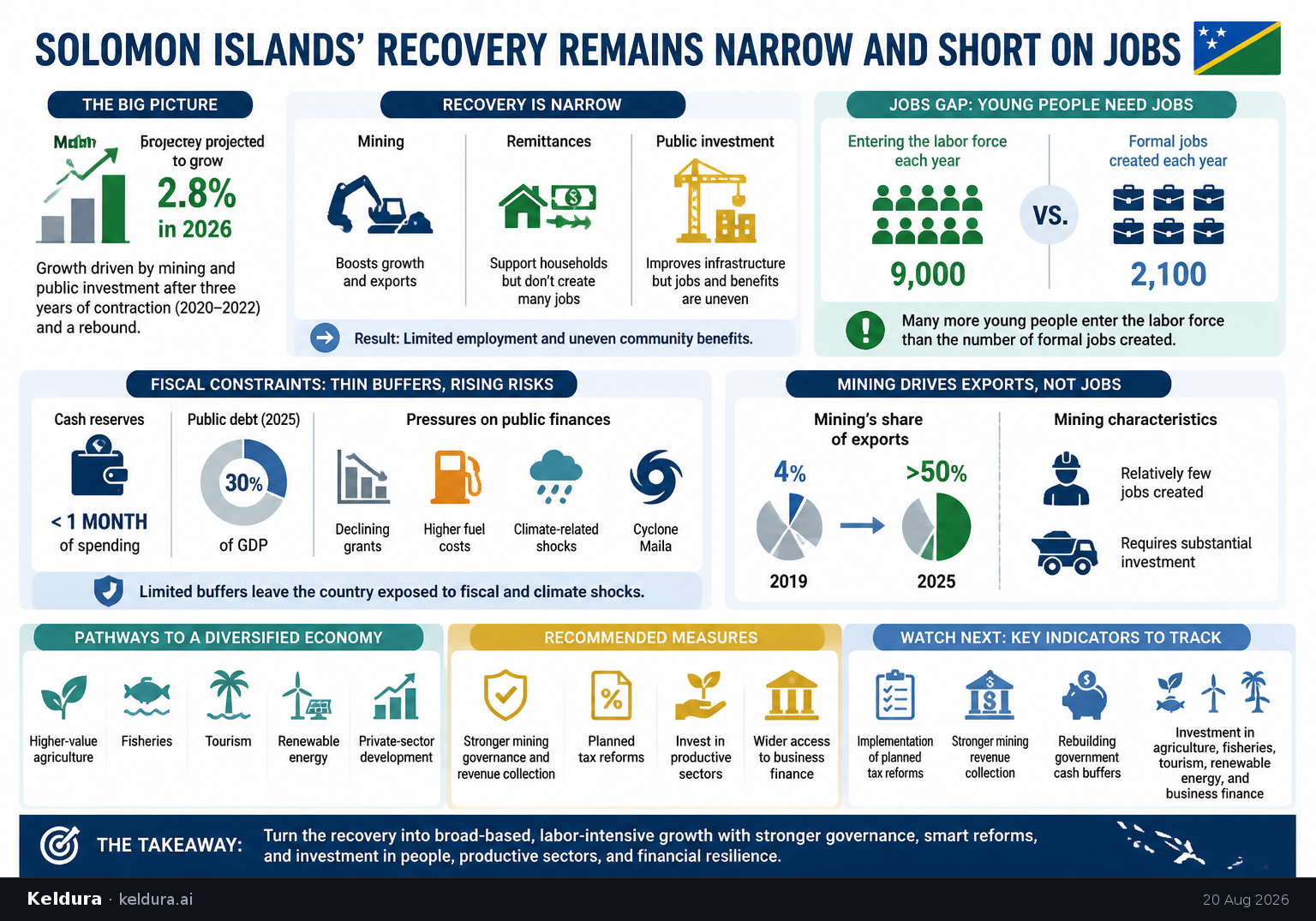
The World Bank projects Solomon Islands’ economy will grow 2.8% in 2026, mainly because of mining and public investment, after three consecutive years of contraction from 2020 through 2022 and a subsequent rebound.[2] The recovery remains narrow: mining, remittances, and infrastructure spending have generated limited employment and uneven community benefits.[2]
Why it matters: About 9,000 young Solomon Islanders enter the labor force annually, but only around 2,100 formal jobs are created, making broader and more labor-intensive growth central to incomes and social resilience.[2] Fiscal room is also limited because cash reserves cover less than one month of spending and public debt reached 30% of GDP in 2025.[2]
Key insights: Mining supplied more than half of Solomon Islands’ exports in 2025, up from 4% in 2019, but the sector creates relatively few jobs and requires substantial investment.[2] | Declining grants, higher fuel costs, climate-related shocks, and Cyclone Maila are adding pressure to public finances and reinforcing the need to rebuild financial buffers.[2] | The World Bank identifies higher-value agriculture, fisheries, tourism, renewable energy, and private-sector development as opportunities for a more diversified economy.[2] | Recommended measures include stronger mining governance and revenue collection, planned tax reforms, investment in productive sectors, and wider access to business finance.[2]
Cheatsheet facts: What changed: A new World Bank Economic Update put 2026 growth at 2.8% but found that the mining- and public-investment-led recovery is producing limited employment and uneven benefits.[2] | Why now: Mining’s export share has surged while labor-force entrants substantially outnumber new formal jobs, and thin cash reserves leave the country exposed to fiscal and climate shocks.[2] | Watch next: Observable indicators include implementation of planned tax reforms, stronger mining revenue collection, rebuilding of government cash buffers, and investment in agriculture, fisheries, tourism, renewable energy, and business finance.[2]
X copy pack
Edition complete
You've reached the end of this edition.