How regional attacks are complicating Iran-US diplomacy
The Saudi-led coalition said it intercepted two drones launched by Yemen’s Iran-backed Houthis toward Riyadh, amid increased attacks.
The Saudi-led coalition said it intercepted two drones launched by Yemen’s Iran-backed Houthis toward Riyadh, amid increased attacks on Saudi cities, energy infrastructure and shipping.[2] At the same time, Tehran and Washington remain divided over sequencing: Iran wants the US economic blockade li…
The Saudi-led coalition said it intercepted two drones launched by Yemen’s Iran-backed Houthis toward Riyadh, amid increased attacks on Saudi cities, energy infrastructure and shipping.[2] At the same time, Tehran and Washington remain divided over sequencing: Iran wants the US economic blockade lifted before reopening the Strait of Hormuz, while Washington wants movement on the strait before giving up that leverage.[2]
Why it matters: The combination of attacks by an Iran-aligned group, threats to Gulf infrastructure and the continued restriction of a waterway normally used by a fifth of global oil and gas shipments expands the number of potential flashpoints that could derail diplomacy.[2][7]
Key insights: Iranian President Masoud Pezeshkian said Tehran was prepared to relinquish its stockpile of uranium enriched to 60% within international law and its Nuclear Non-Proliferation Treaty obligations.[2] | Pezeshkian hopes to revive a ceasefire understanding before the November US midterm elections, while President Donald Trump has suggested a deal would be more likely afterward.[2] | British Foreign Secretary Ed Miliband urged Iran to choose de-escalation and diplomacy, reopen the Strait of Hormuz and end Iranian-linked hostile activity on UK soil.[7] | Saudi civil defence alerts were issued for Khamis Mushait and Abha, but not Riyadh, despite the coalition’s statement that the intercepted drones were headed toward the capital.[2]
Cheatsheet facts: What changed: Saudi Arabia reported intercepting two Houthi drones headed toward Riyadh as diplomatic contacts continued over Iran’s nuclear stockpile, sanctions and the Strait of Hormuz.[2] | Why now: Iran and the US both describe possible concessions but disagree over which side must act first, while regional attacks sustain military pressure.[2][7] | Watch next: Watch for verified movement on reopening the Strait of Hormuz, US economic restrictions or Iran’s 60%-enriched uranium stockpile—the concrete steps at the centre of negotiations.[2][7]
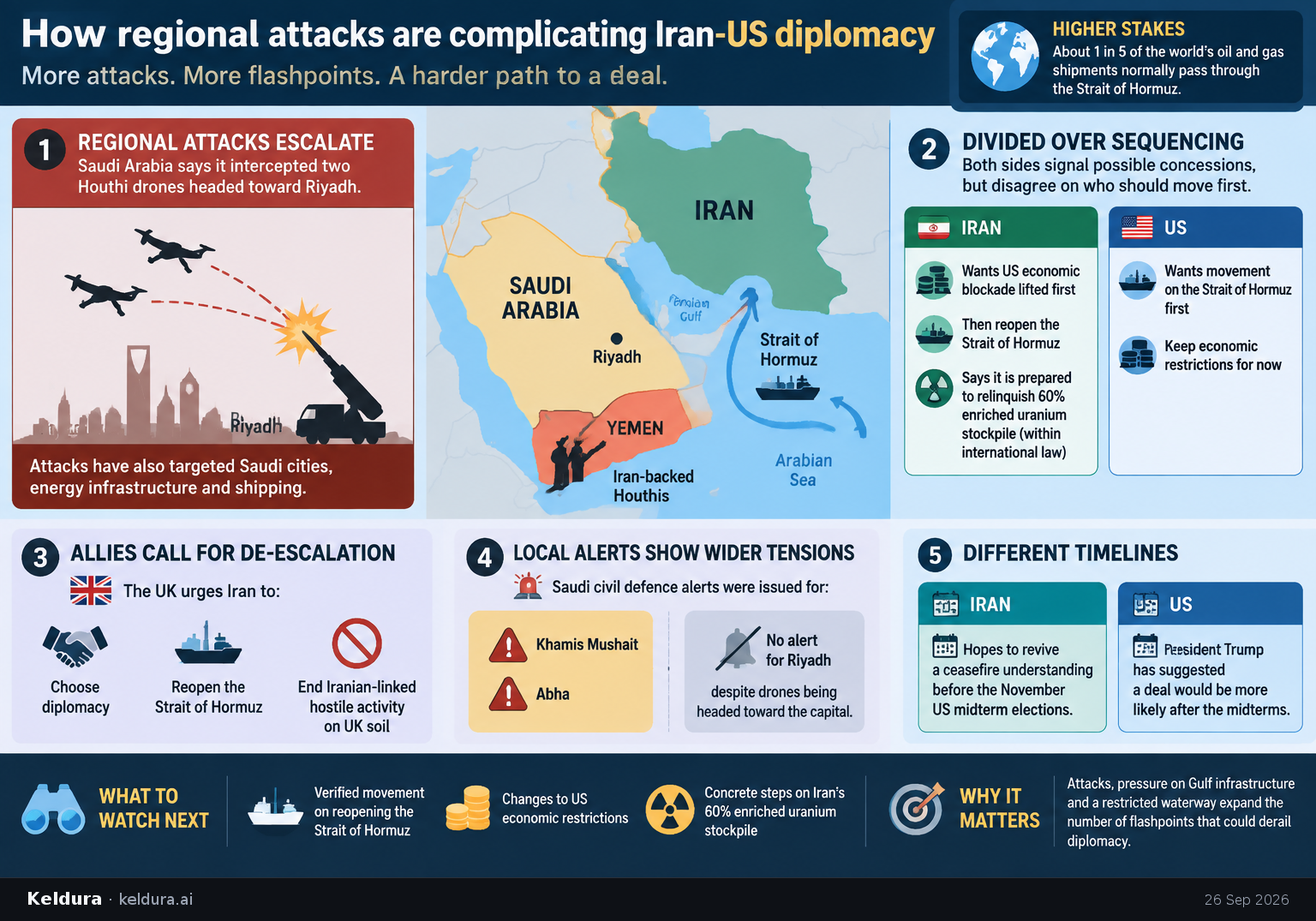
The Saudi-led coalition said it intercepted two drones launched by Yemen’s Iran-backed Houthis toward Riyadh, amid increased attacks on Saudi cities, energy infrastructure and shipping.[2] At the same time, Tehran and Washington remain divided over sequencing: Iran wants the US economic blockade lifted before reopening the Strait of Hormuz, while Washington wants movement on the strait before giving up that leverage.[2]
Why it matters: The combination of attacks by an Iran-aligned group, threats to Gulf infrastructure and the continued restriction of a waterway normally used by a fifth of global oil and gas shipments expands the number of potential flashpoints that could derail diplomacy.[2][7]
Key insights: Iranian President Masoud Pezeshkian said Tehran was prepared to relinquish its stockpile of uranium enriched to 60% within international law and its Nuclear Non-Proliferation Treaty obligations.[2] | Pezeshkian hopes to revive a ceasefire understanding before the November US midterm elections, while President Donald Trump has suggested a deal would be more likely afterward.[2] | British Foreign Secretary Ed Miliband urged Iran to choose de-escalation and diplomacy, reopen the Strait of Hormuz and end Iranian-linked hostile activity on UK soil.[7] | Saudi civil defence alerts were issued for Khamis Mushait and Abha, but not Riyadh, despite the coalition’s statement that the intercepted drones were headed toward the capital.[2]
Cheatsheet facts: What changed: Saudi Arabia reported intercepting two Houthi drones headed toward Riyadh as diplomatic contacts continued over Iran’s nuclear stockpile, sanctions and the Strait of Hormuz.[2] | Why now: Iran and the US both describe possible concessions but disagree over which side must act first, while regional attacks sustain military pressure.[2][7] | Watch next: Watch for verified movement on reopening the Strait of Hormuz, US economic restrictions or Iran’s 60%-enriched uranium stockpile—the concrete steps at the centre of negotiations.[2][7]
X copy pack
Edition complete
You've reached the end of this edition.